SEO vs. PPC: What’s Right for Your Business?
SEO vs. PPC: Learn the pros and cons of both strategies and discover which one is right for your business.
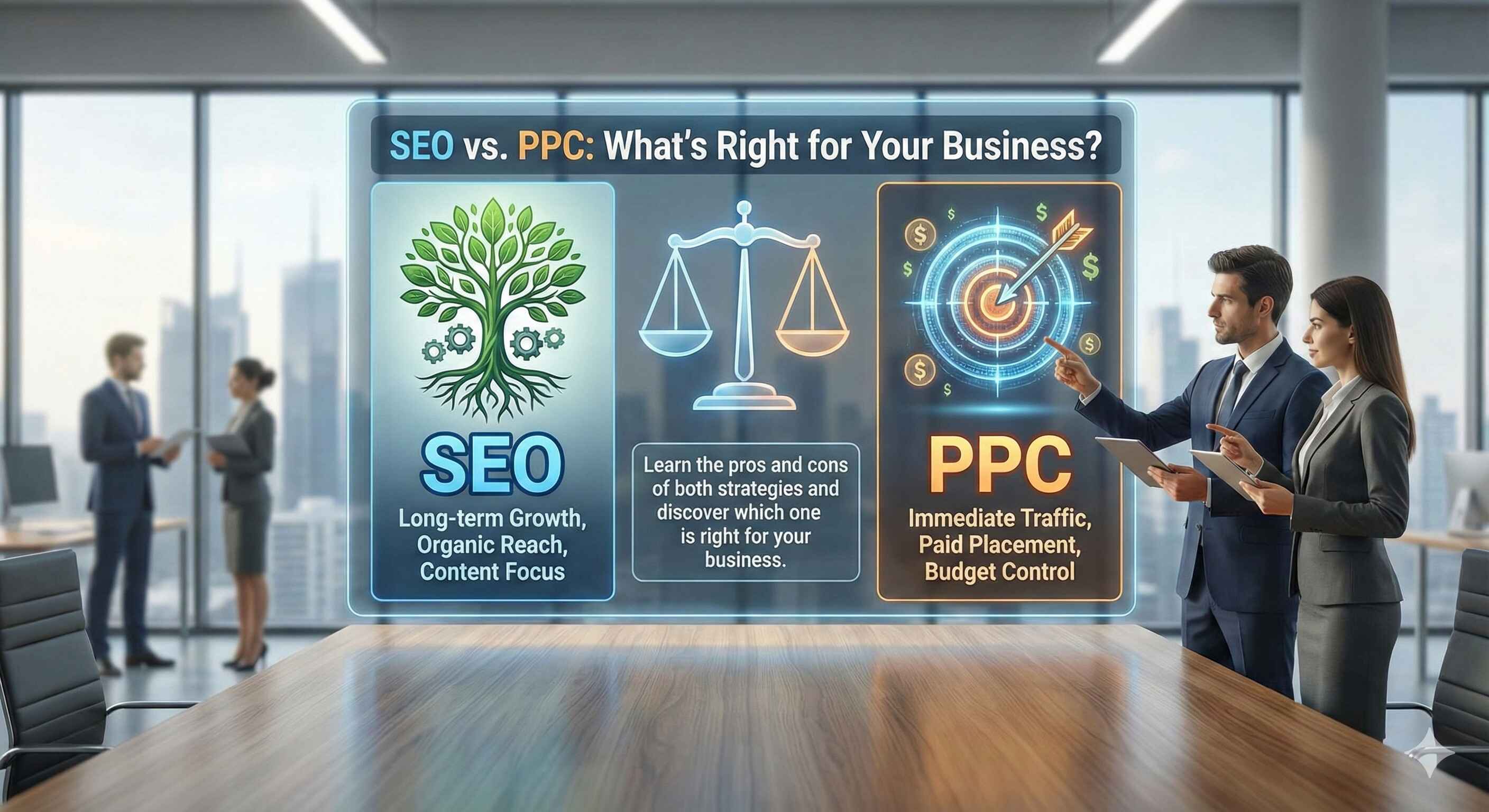
Introduction: When it comes to digital marketing, businesses often face a critical choice between Search Engine Optimization (SEO) and Pay-Per-Click (PPC) advertising. Both strategies have unique advantages, but which one is the right fit for your business? In this blog, we’ll dive into the pros and cons of SEO and PPC, helping you decide which option aligns best with your goals.
SEO: The Long Game SEO is all about optimizing your website to rank higher on search engine results pages (SERPs) organically. This means no direct payments for clicks, but rather improving your site’s structure, content, and authority to drive traffic.
Pros of SEO:
- Cost-effective: Once established, SEO can generate consistent organic traffic without continuous ad spend.
- Long-term results: SEO takes time but often yields sustainable, lasting results.
- Credibility: Appearing naturally in search results boosts brand trust.
Cons of SEO:
- Time-consuming: Results can take months to materialize.
- Constant updates: Search engines change their algorithms frequently, requiring ongoing adjustments.
PPC: The Quick Boost PPC involves paying for your website to appear in sponsored search results or on social media platforms. You only pay when someone clicks on your ad, making it an attractive option for businesses needing immediate visibility.
Pros of PPC:
- Instant results: Your ads can start driving traffic almost immediately.
- Highly targeted: You can target specific demographics, locations, and even times of day.
- Trackable ROI: Detailed analytics let you track exactly how your ads are performing.
Cons of PPC:
- Costly: You need to continuously invest money, and highly competitive keywords can drive up costs.
- Temporary: Once you stop paying for ads, the traffic stops.
Conclusion: Both SEO and PPC have their place in a robust digital marketing strategy. For businesses looking to build long-term authority and organic traffic, SEO is a solid investment. If you need immediate visibility and are willing to invest in paid ads, PPC is the way to go.
Share This Post
Related Articles

10 Reasons You Need a Digital Marketing Strategy
If you want to grow your business online, you need a digital marketing strategy. A digital marketing strategy is a plan that outlines how you will use different online channels and tools to reach your target audience, achieve your goals, and measure your results.

Content is King: Effective Content Marketing Strategies
Discover the art of content marketing! Dive into effective strategies, FAQs, and expert insights to elevate your content game.

Sales Unleashed: Mastering the Art of Selling Digital Services and Products!
Discover the fundamentals of sales and how to effectively market digital services and products. This comprehensive guide will turn you into a sales pro in no time!
Unlocking Success with PAGEFIST: The Best Digital Marketing Company in Raipur
Discover why PAGEFIST is the best digital marketing company in Raipur! From SEO to web design, we offer comprehensive services to boost your online presence. Learn more!
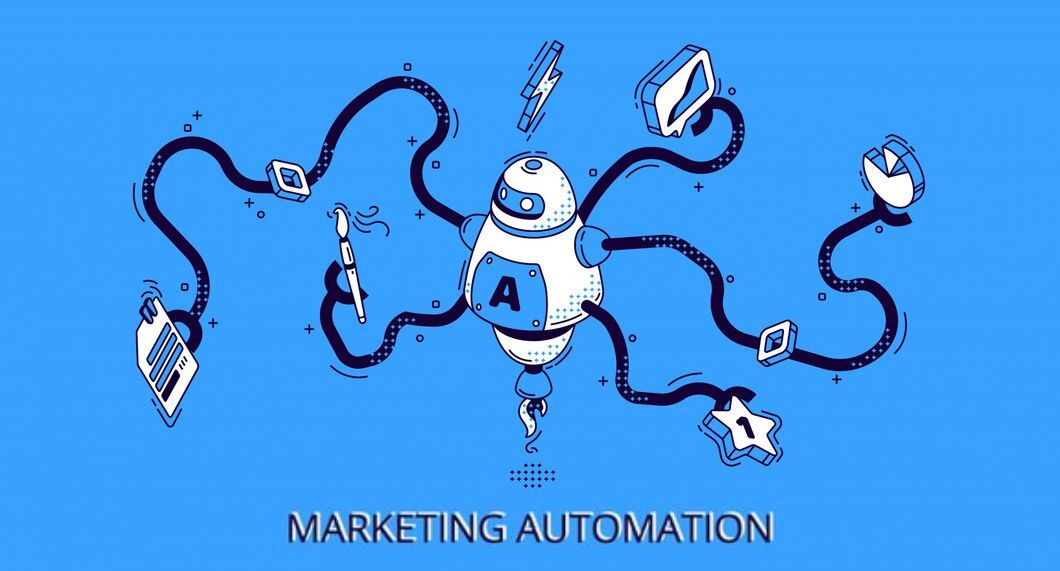
Automating Success: A Startup's Guide to Cutting-Edge Marketing Strategies
Unlock the transformative power of marketing automation with our comprehensive guide tailored for startups. Streamline customer journeys, craft precision-targeted campaigns, and overcome integration challenges. Dive into case studies, explore future trends, and equip your startup with strategies for sustainable growth.
Related FAQ
No related FAQ.
Say Hello
To Your Dream
- About
- Privacy Policy
- Terms of Service
- Terms and Conditions
- Cancellation and refund
- Shipping and delivery
- Contact Us
- Blog
- Products
- For Startups Support
- Pages
- FAQ
- Thanks and Credits